2015-04-03
We are on a multiple hike vacation. We have spent the previous day in Arivaipa Canyon on a permit and have slept in the tributary called Turkey Creek. I want to know what is further upstream in the wilderness.
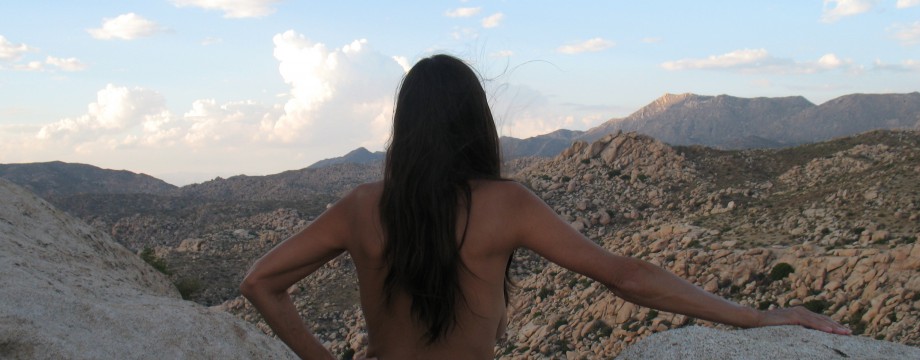
We are on a multiple hike vacation. We have spent the previous day in Arivaipa Canyon on a permit and have slept in the tributary called Turkey Creek. I want to know what is further upstream in the wilderness.
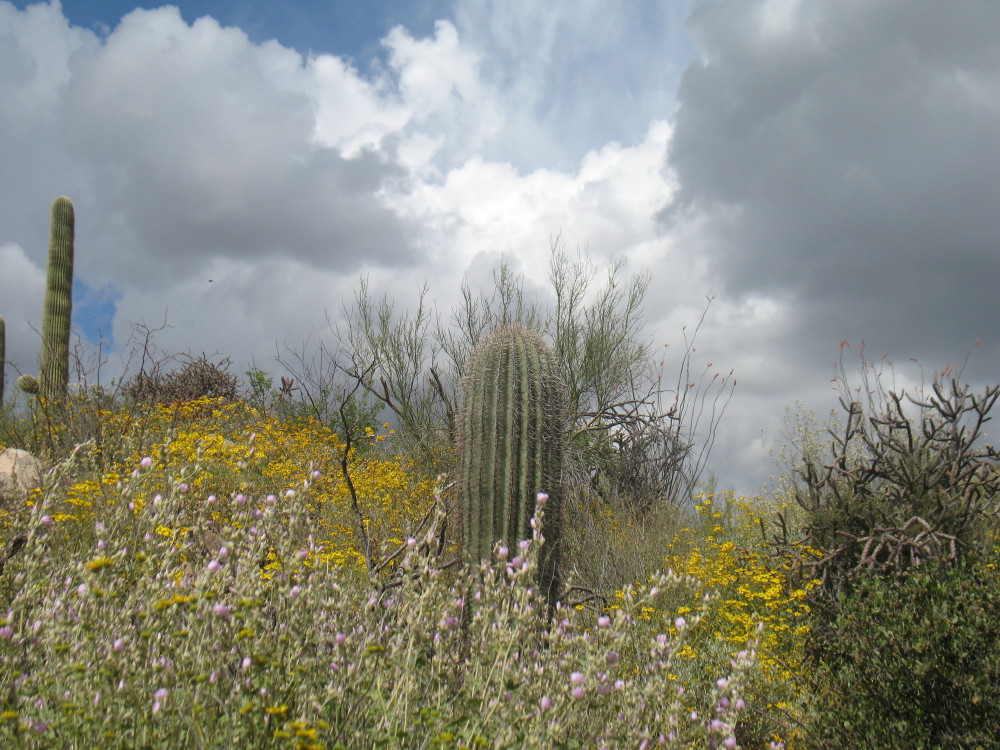
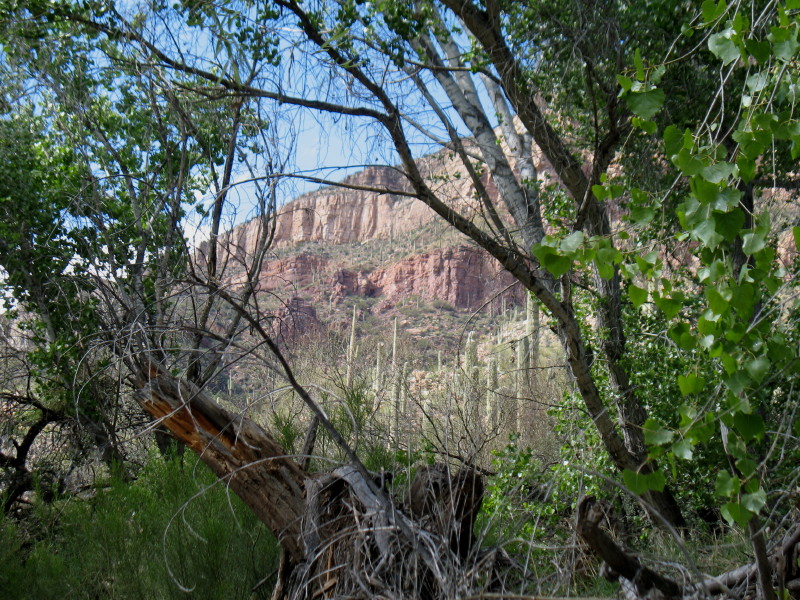
The rain’s warmer temperatures have created an early spring. Many plant species are reacting in an unusual manner. What has happened this last week around here is the explosion of the brittle bush. It has increased since a freeze had trimmed it back a few years ago. It now covers much of the mountain range’s hills. It is coupled with other large plants with hundreds of flowers making a vast rock garden of color. The early leaves of the mesquite are florescent and the ocotillos have green leaves up their stalks a crescendo with their red/orange crown of flowers. Many large stag horn cholla are a burgundy/purple and in good health. Among these dominant species, the more subtle spring blossoms in many colors can be found in patches. Add a turquoise sky and the effect is glorious.
So with this in mind, we have invited friends out to hike, to experience and to take part in a sweat.
We take off Wednesday afternoon after going to watch the hiking movie “Wild.” I was thinking that it might create some inspiration for the next few days of travel to Arivaipa Canyon, Turkey Creek, and then the Muleshoe Ranch. During the three explorations, the conditions progressively become more pristine, more rugged and primitive. I’ll post one of these trips each coming week, unless a new adventure pops up.
Ariavaipa Canyon, a nature preserve, has two entrances and I have managed to acquire two day passes for Thursday for the eastern entrance. We had gotten a taste for the place a few weeks earlier, as we visited a retreat near the western entrance. We intend to head back when we can get permission for a longer stay, but this is what we have to work with, for now.
The hot springs have been described here: https://thefreerangenaturist.org/2015/09/22/eden-hot-springs-trip-report/#more-442
And Here: https://thefreerangenaturist.org/2015/09/
AND Here: https://thefreerangenaturist.org/2015/11/10/mud-baths-in-eden-a-trip-report/#more-651
We stopped in last weekend. The temps were in the 80F’s. It was just one of those perfect times when wearing clothing couldn’t be more wrong-headed.
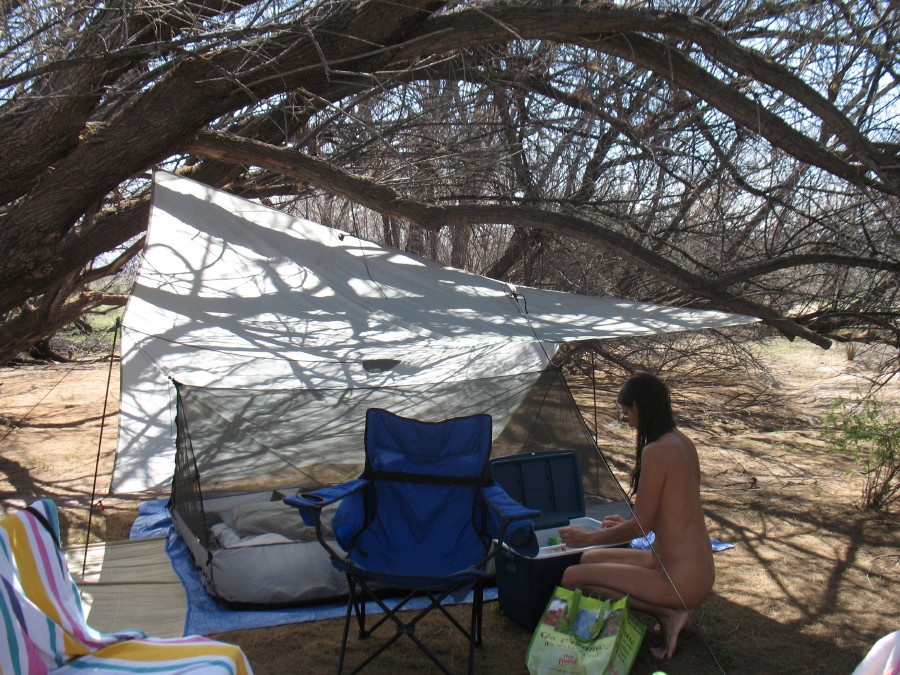
Our arrival takes us to new spots that had been carved out of the tamarisk/mesquite woods. They are near the big pool. Although winter still has its potential, leaving most branches bare, there is quite a bit of shade to be had. We set out our tarp using low branches and below it pitch the net tent. We will be spending all of our time outside and experiencing the sensuality of the weather naked. I have a terry robe and warm mineral waters when the evening turns cooler. A camping quilt will get me through the night which will drop down closer to 50F. My down hood traps in the heat.
I had an invitation to join a weekend retreat in Arivaipa Canyon for one class, Sunday. I’m going to assist bringing the process/class to Tucson and needed some demonstration. We hadn’t been to the western entrance and this would provide an excuse to explore. If you remember we had visited the Eastern entrance Here:
https://thefreerangenaturist.org/2015/08/11/timing-is-everything-in-paradise-a-trip-report/
This side is closer to Phoenix and Tucson and more frequently traveled. There is a permit required to travel into the preserve and limited to 30 persons per day. This weekend was booked up months in advance. The retreat was being held downstream from the preserve among some ranches. We didn’t know if we would have opportunity for a riparian hike or not.
Occasionally, I write about my experiences on my stealth trail in the desert out my doorway:
It was the first good Sunday in a while. We were committed to making the most of our opportunity. We gathered some clothing, thinking that it could turn cold with just a change in the wind.
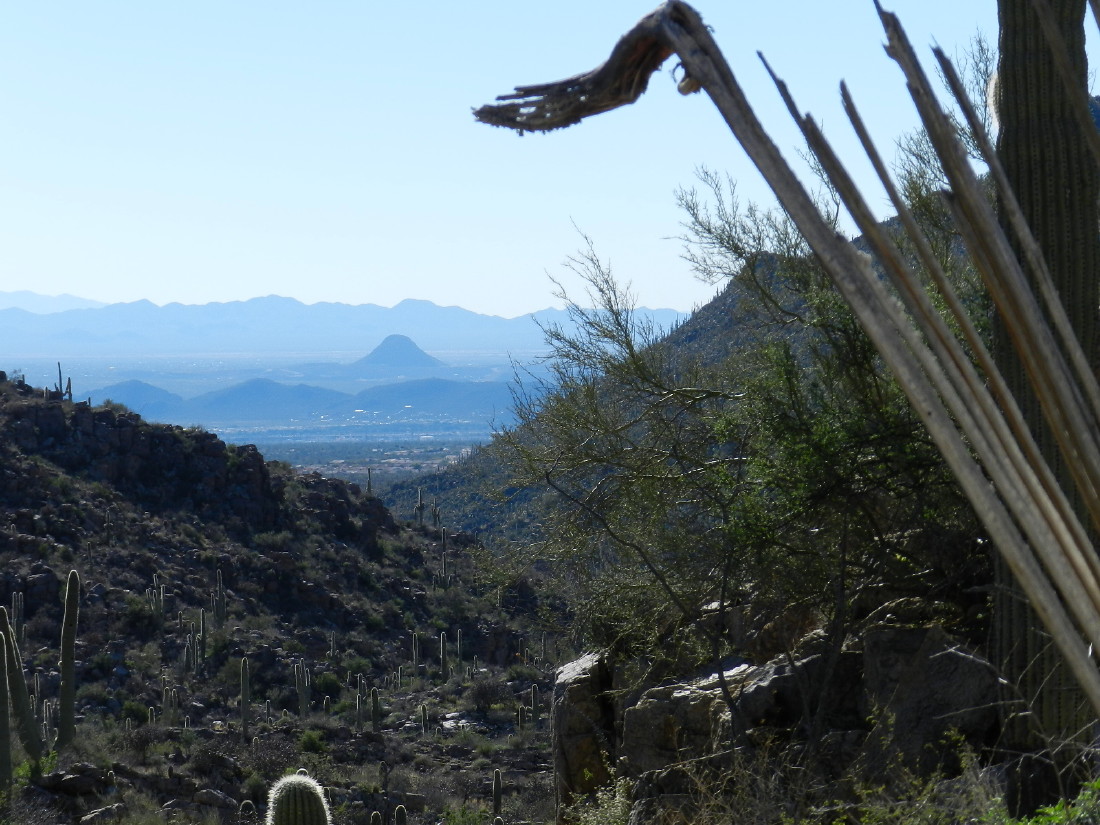
We drove up to the trailhead and began the ascent up the jeep trail into the Tortolita Hills. My plan had been to run up the hill. Having been laid up with sciatica from a back injury three months back, it had just started to feel mostly well. I am determined to get well and in hiking form. Spring is on its way and I have missed these forays into nature, deeply. We soon realize that we are getting a tad winded at even a slower pace. We are out of shape. We trudge on, slowly, feeling more invigorated just by the spirit of this exercise of naturism.
Remember to click the pics that don’t show the pics at first. There lies some of the best of the stuff.
We get up early Saturday morning to go car camping. The “big top” tent, the air mattress, the cooler, wool rug, candles, chairs, etc., all for camping in luxury. The destination is upstream from Chebo Falls, again. The previous story is here: https://thefreerangenaturist.org/2017/01/21/chebo-falls-journey-part-i-a-trip-report/
Part II is here: https://thefreerangenaturist.org/2017/01/29/chebo-falls-journey-part-ii-a-trip-report/
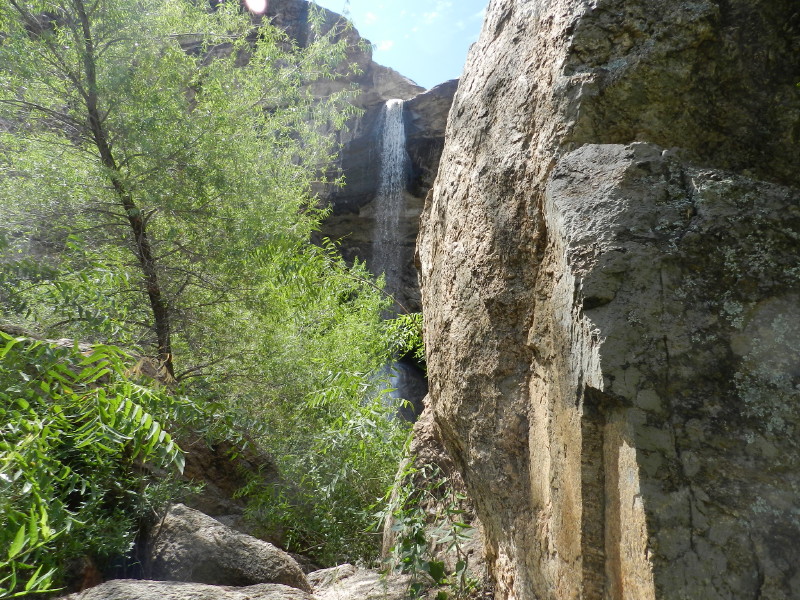
The immediate goal is to get to that huge canopy of a tree before someone else does. It had rained thunder and lightning hard up there, the night before. There would likely be no one camping already. The next goal is to visit the 80 foot waterfall. I haven’t seen it in 30 years. There have been monsoon rains, so the water should be flowing strong. This is exciting to us.
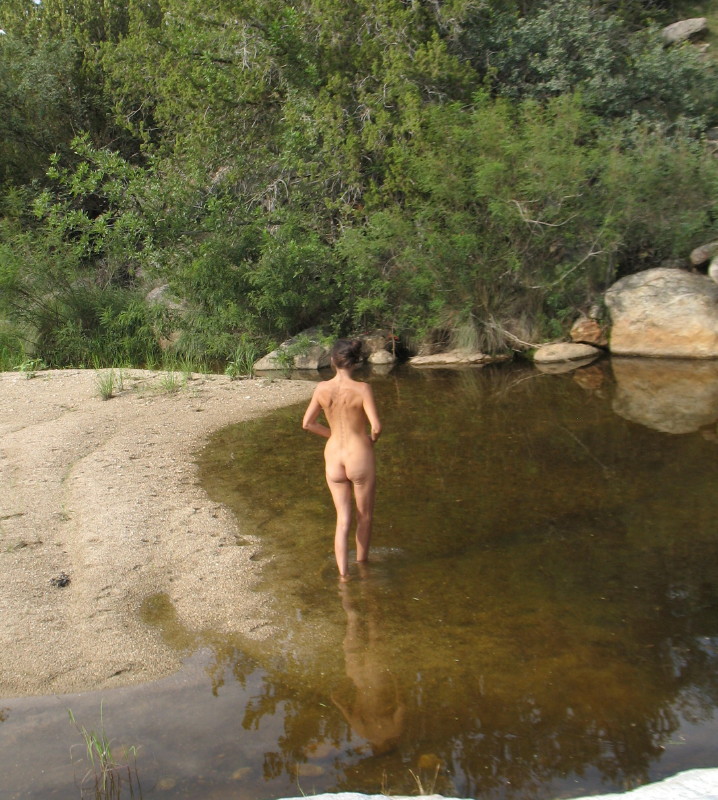
In the morning, we take off upstream. The sun and blue sky come out, the temps are wonderful. The water is flowing in the creek. We go as far as we can, taking photos along the way and deciding which is the best of many ponds. We are able to travel nearly all the way by climbing the huge rock slabs that the creek travels through. It is bare granite mountainside, always denuded of soil and vegetation. After exploring, we go back to the most favored pond.

Each year sometime around early July, give or take a couple of weeks, Tucson begins it’s Monsoon Season. Warm rains are pulled up from Mexico each day, generally in a deluge. Often there is seen across the valley, a black wall of water with elongated bolts of lightning with resounding thunder. The sonorous bombardment has often made me wonder. Could the name of our Sonoran Desert home be derived from these experiences?
There is entertainment each day. For instance sunset and sunrise explodes with awe inspiring color, like few places in the world. The night skies can be fascinating and are world renowned fireworks displays. Bolts flash clear across the sky in fingers while thunder crashes down shaking buildings.
The dry washes flow and rage with water. Life comes back to the desert after the usual seasonal drought. Flowers bloom, animals get active, it is an extra season like spring, but this time with more extreme temperatures. Many plants are geared to bloom to this timing. Some do so, only during this time of year. It is a fifth season.

 The Free Range Naturist