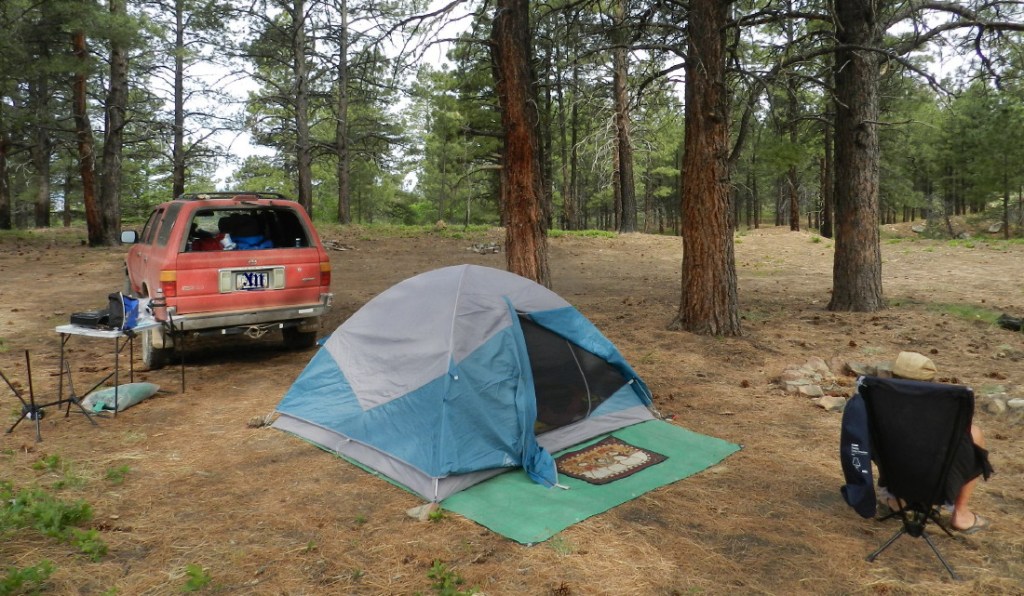
Off of the main road, we take what appears to be an obscure trail, or road, which leads us uphill into forest. Eventually, a flat surface is found. Pine needles cover the ground here. There is evidence of previous fires, Black/grey ash is scattered all around the pile of rocks, that were once a fire pit. It is dirty, but I’m tired, and little on this mountain looks like it will be anything but up, or down. Our tent is quickly erected over a dirty plastic tarp.
We could have driven into Blanding to the trailer camp, but we have a deep desire to keep out of “civilization.”
In time, we decide to take a walk after a long day of mostly sitting and see what potential there is in the area. The road/trail that we came in on continues uphill. Immediately, there is a pleasing quiet and serenity here. The loud rumble of the truck on gravel and the tension of seemingly endless bind curves over hours has been a contrast to this soothing silence.
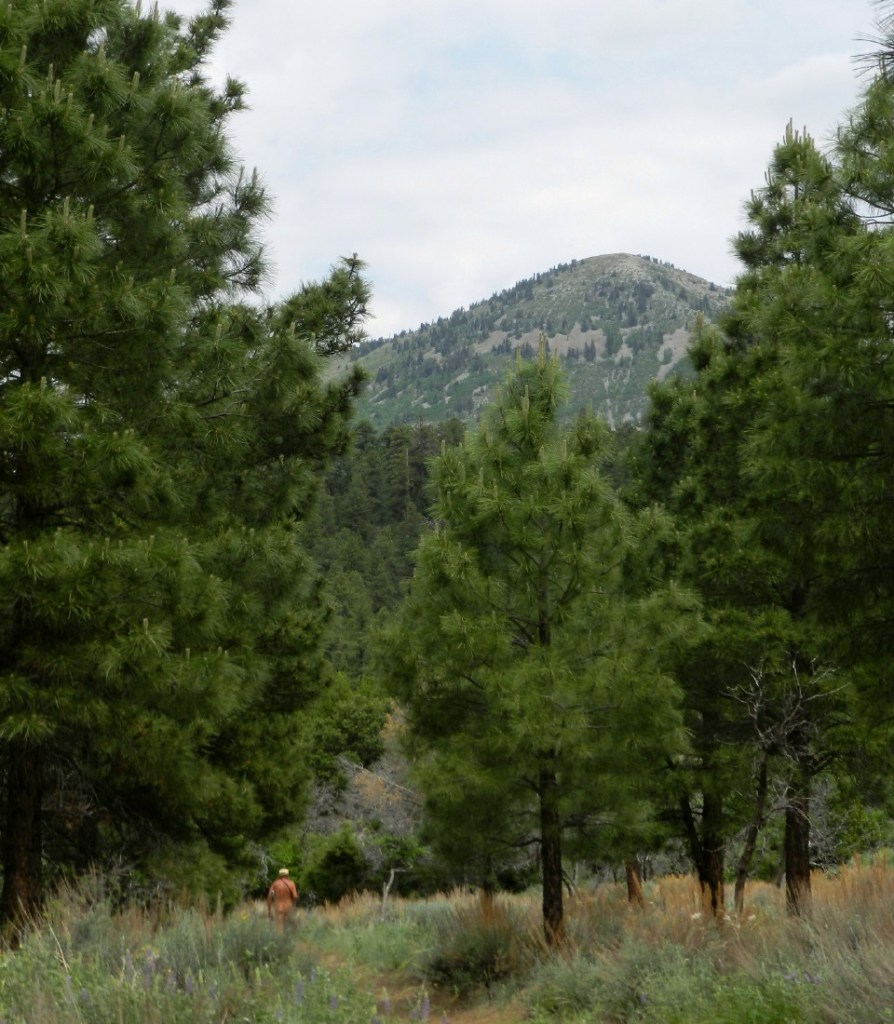
We discover no walking trails, but there is a foliage covered old rail bed and the rough old road that we are on. There must have been an old mine around here.
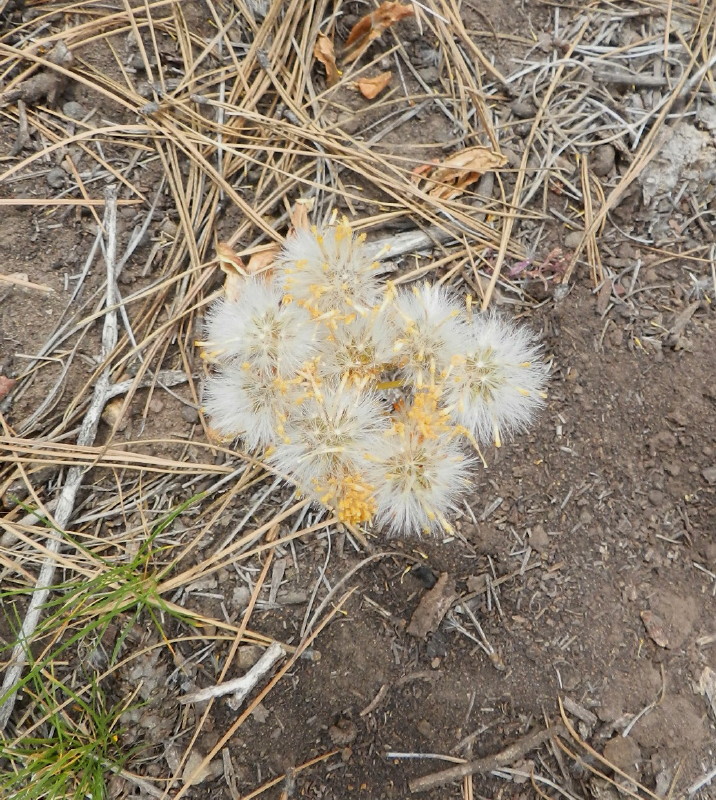
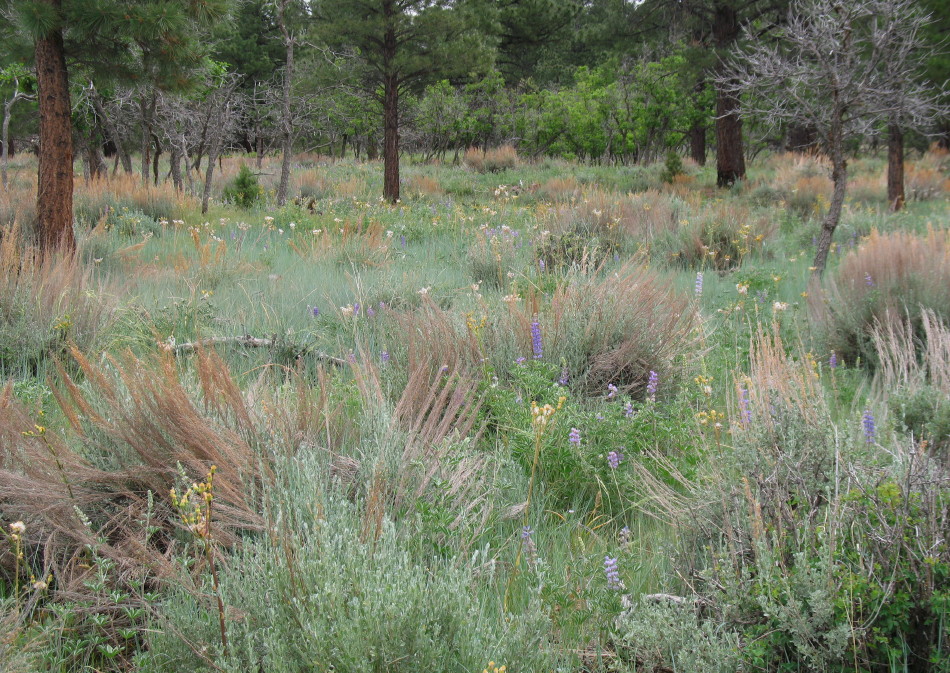
We continue further. Along the road, where the forest disappears and sunlight is not squandered, is a collection of unfamiliar vegetation. We agree that there is a foreign other world quality to this place.
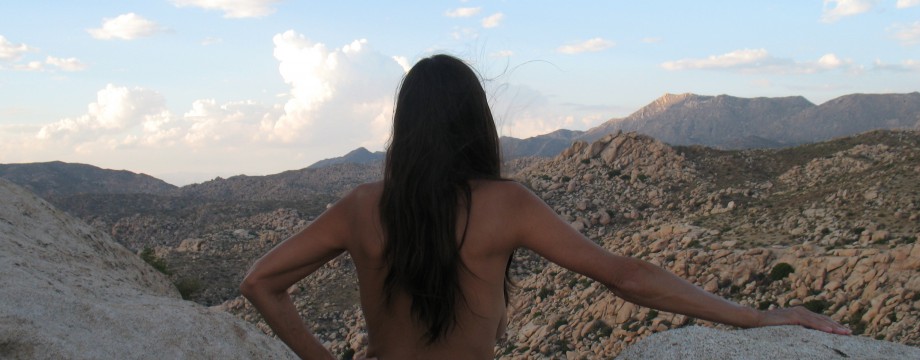
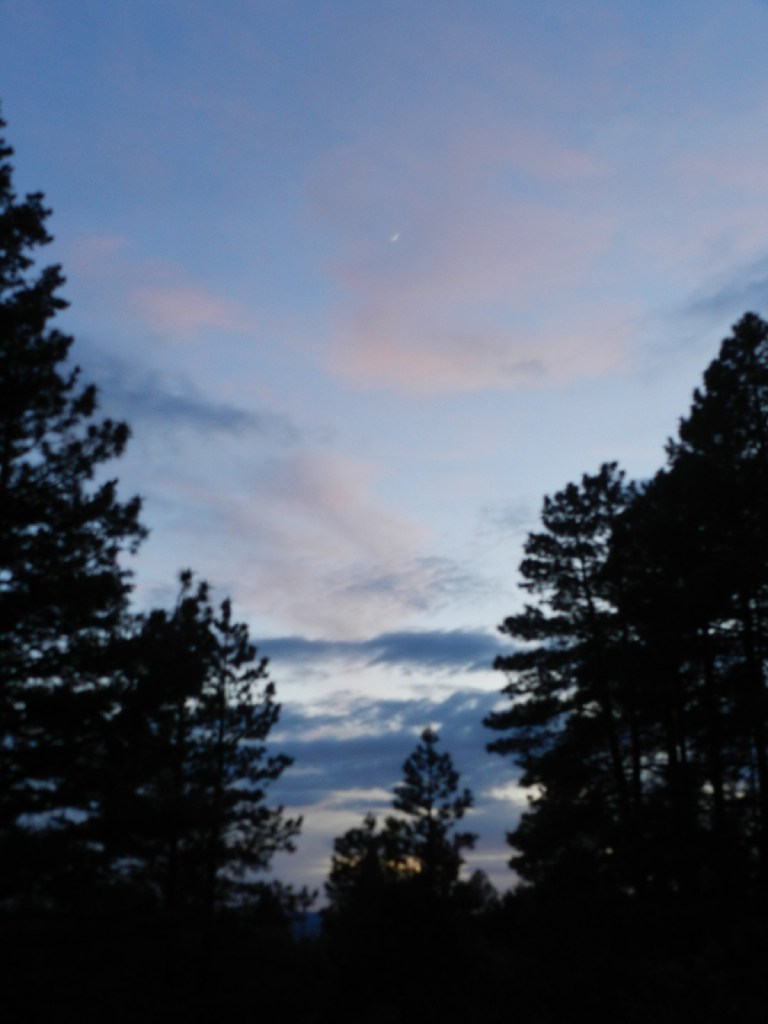
Just as sunset begins to take place, this opening gives us a good look across the ridge to open sky and the moon. We stand and watch the entertainment of pastel colors in blue. From this vantage we see no threat of rain.
During historic times, the Weeminuche Utes, along with some members of the amorphous San Juan Band Paiutes, laid claim to this region. Traditional camping areas nearby, such as a Paiute Springs, Allen Canyon, and Montezuma Canyon, had sufficient water and forage to allow Native Americans to live close to a convenient variety of hunting and gathering resources. Navajos also used the area, collecting a variety of coniferous, deciduous, and herbal plant products for medicinal purposes. Blue Mountain is called “Furry Mountain” by the Navajos, who say it has a male spiritual inner form whose female counterpart is the La Sal.
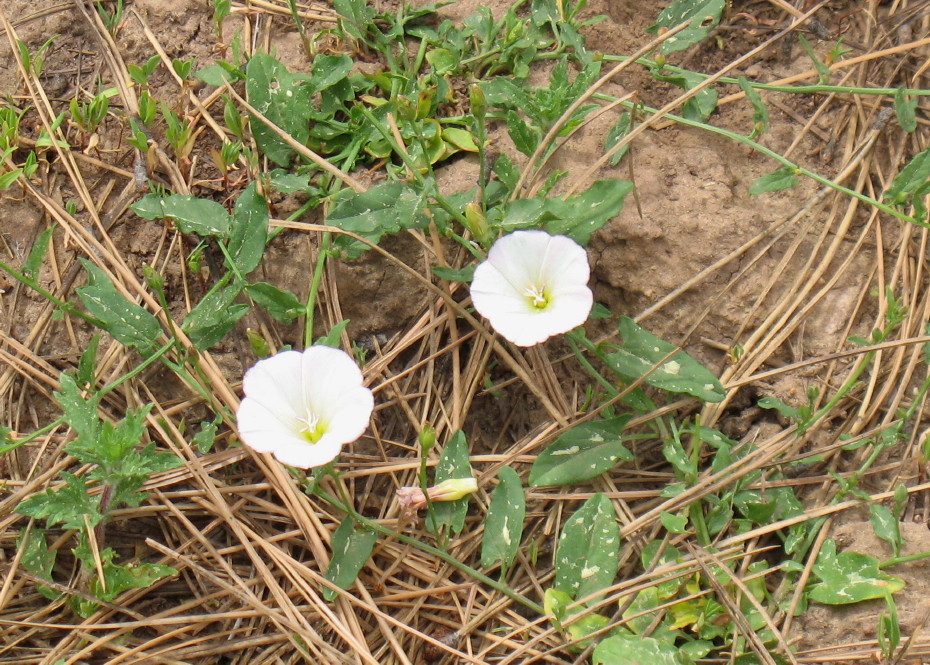
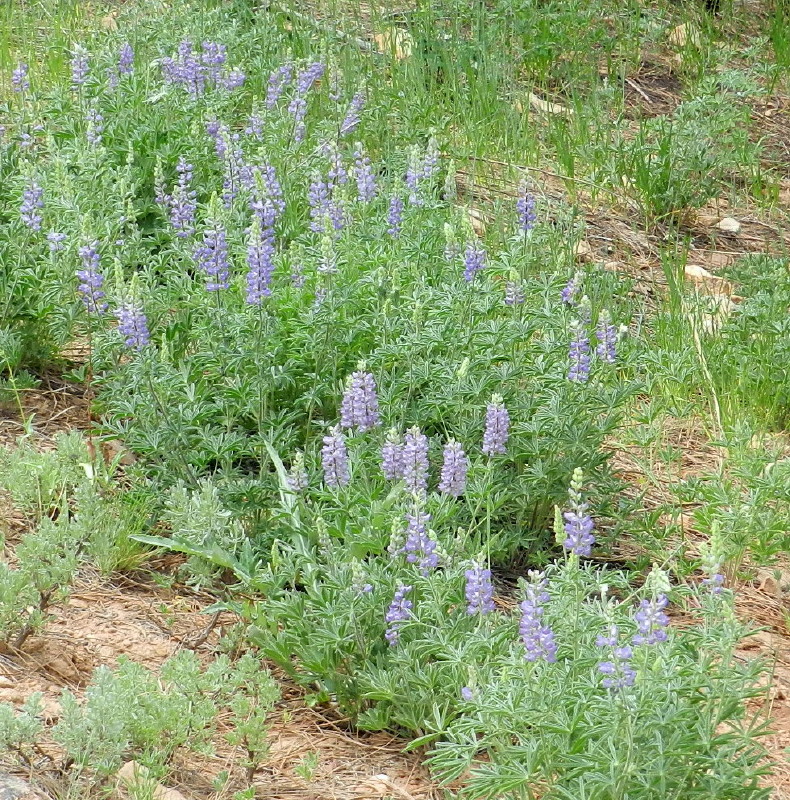
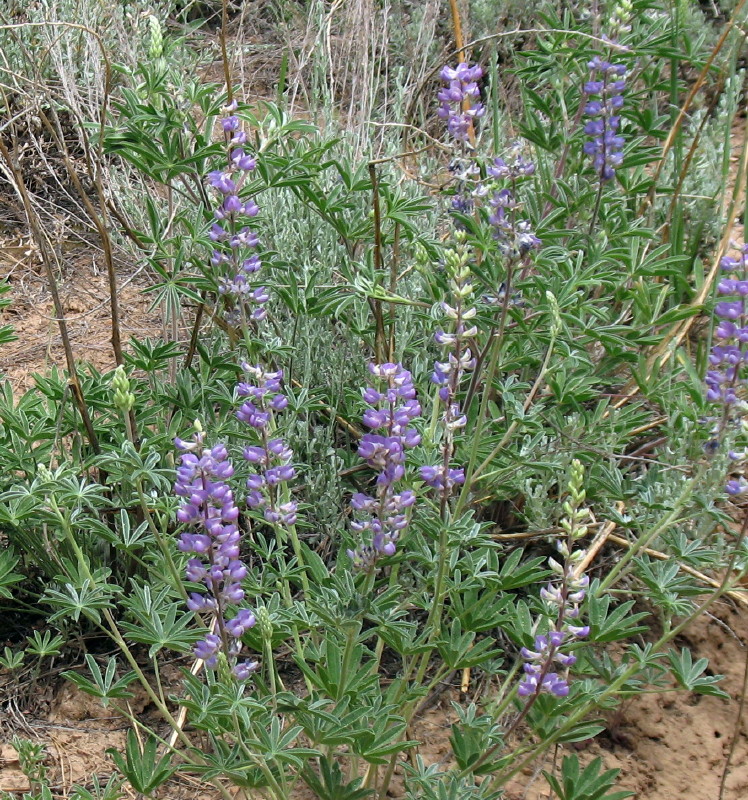
I pinch a piece of a sage bush on our way back in the light of dusk. It has a wonderful strong aroma. There has been this and a strong lilac smell from purple flowers.
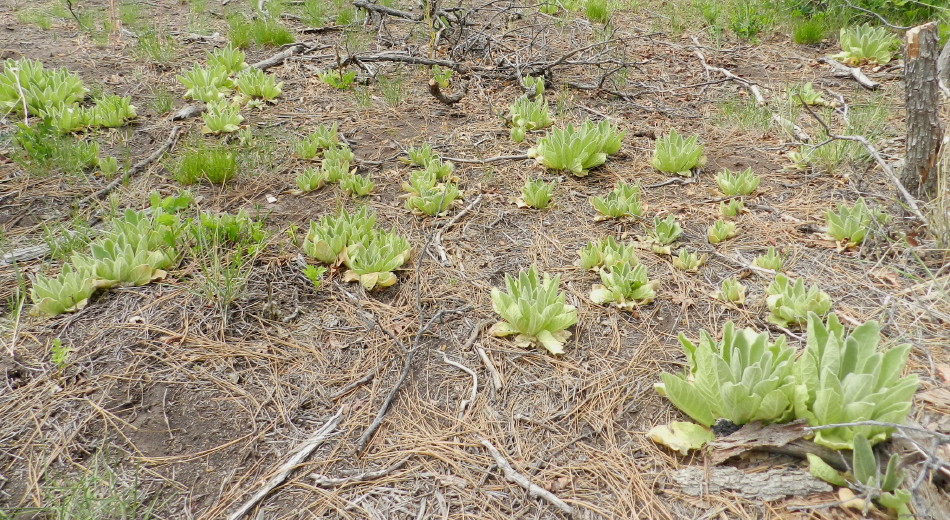
Mullein is in abundance. We’ll have fresh tea.
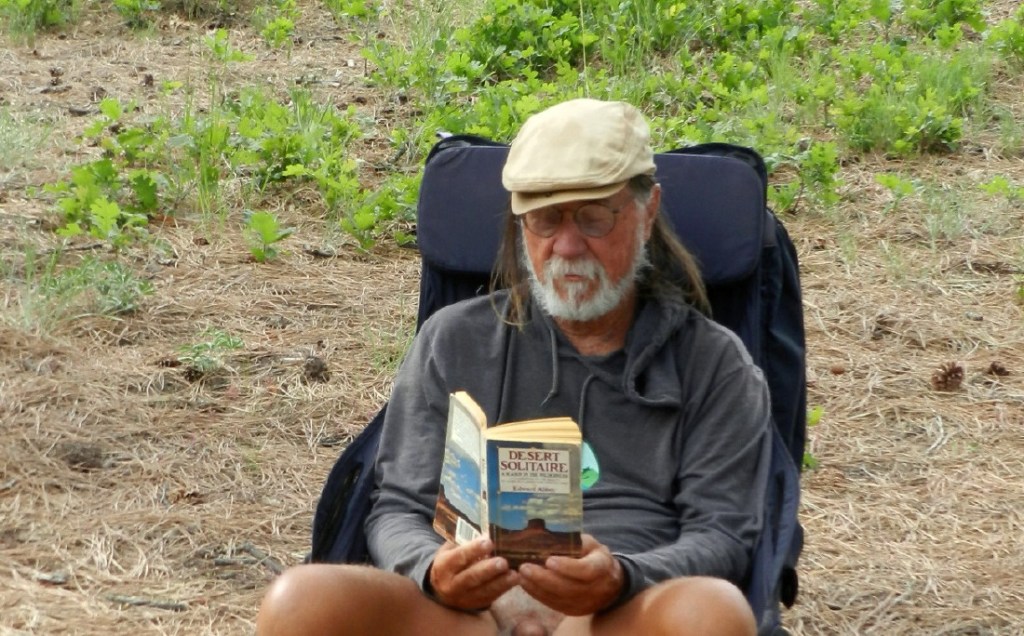
Content with our choice to stay out of the claws of man’s world, its money, charges, clothing customs, rules and lack of perceived elbowroom, we lay down early and read Edward Abbey to each other, and watch the sky through the trees, until we fall asleep in a very quiet night.
As we sleep, the stars glittering through the open net of our tent are slowly replaced by overcast clouds. Around 4am, I am awoken to drops of water on my face. There is a sprinkle that acts like it is turning into rain. DF is also alerted and aware of the wet peril. We jump out in a reluctant daze and quickly spread the tent rain tarp, creating a cozy little dome with roof and walls. Just as soon as we complete our emergency chores, the rain stops as quickly as our sleep had.
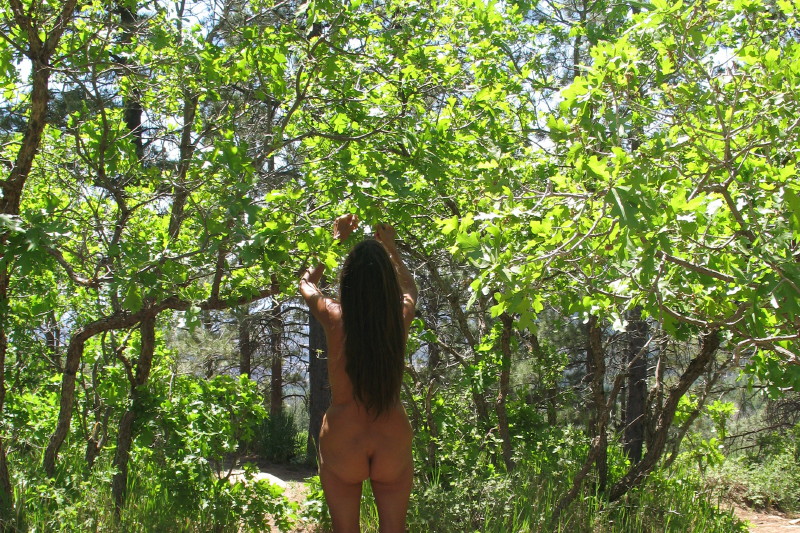
In the morning, with no threat of rain, the air is warm enough to strip off our night shirts and walk nude into the forest’s morning air, to explore and appreciate. There is a stand of small oak that to me are the spitting image of a Van Gogh painting that I admire.
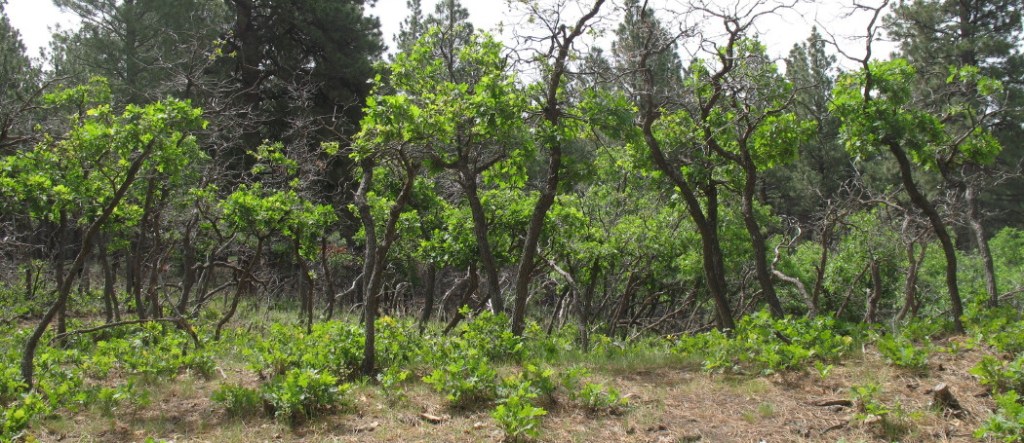
It is something still young, after surviving the last fire. The leaves are soft. As the morning light penetrates and plays in the dancing leaves and they glow. It is a pleasant place.
A trail leads past a basin to the old rail bed, which is a choice walk with little grade. There is a two track trail through this, which is being slowly engulfed with shrubbery. It is a long thin field of sage, blue sage on the sacred Blue Mountain. DF has plastic bags in my backpack. I turn around to allow her to access these and a pair of scissors.
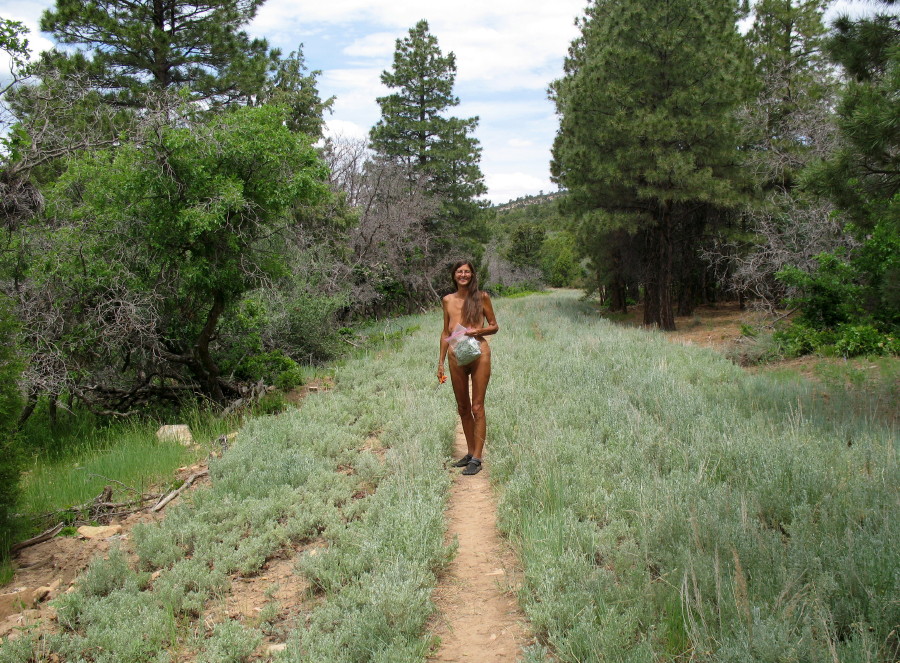
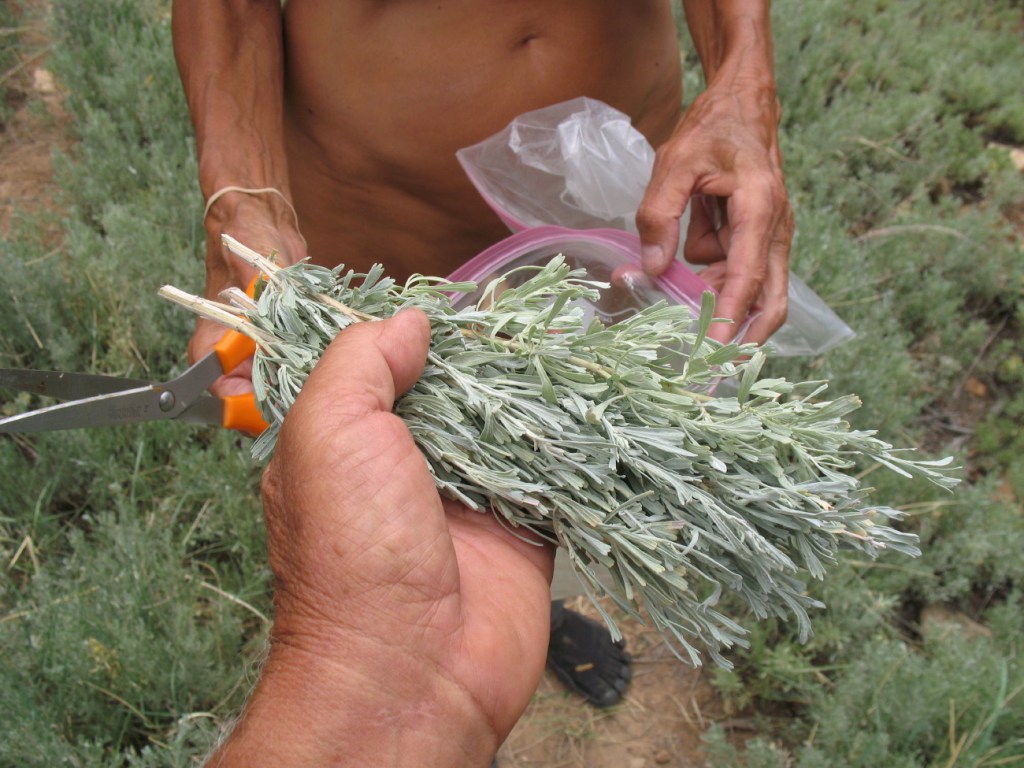
We harvest carefully, taking just the right sprigs for our purposes from a variety of the plants. This leaves no damage or significant loss to the lives of these plants. It is an act of appreciation and gratitude to only take what is needed and leaving things as untouched as possible.
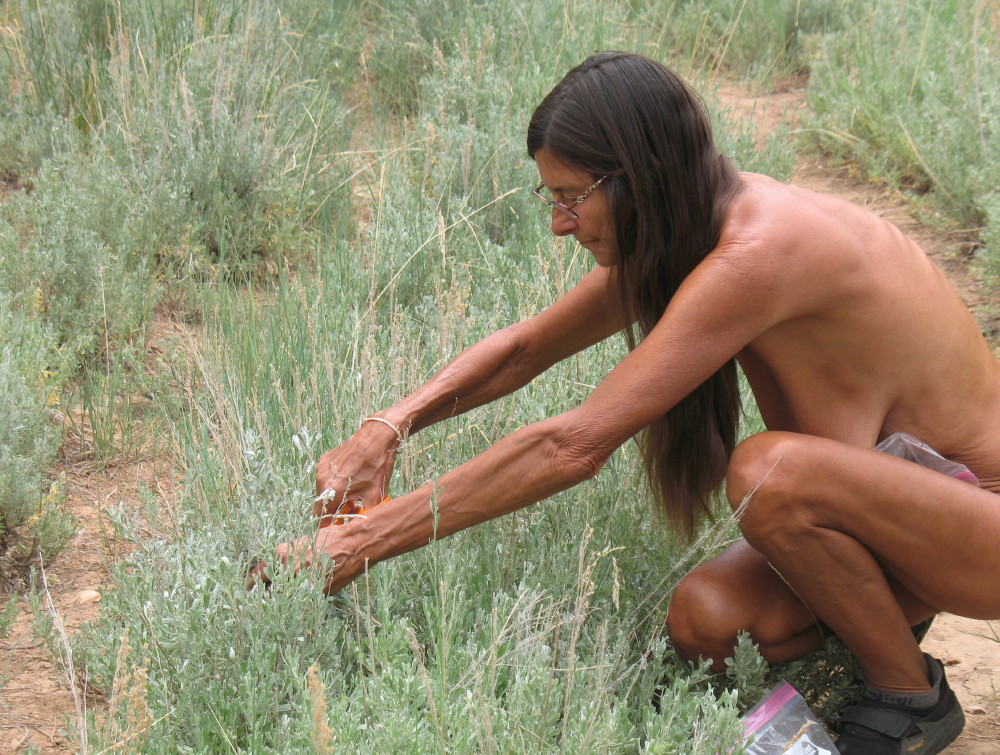
We’ll take this to Tucson and burn it on the sauna heater, or soak up the essence in water to make the sweat more pleasant, organic, and sacred. All of the way home, the cab of the truck shall smell with this wonderful scent.
There will be a busy day today in town, but we still have plenty of time to break camp and enjoy breakfast leisurely and comfortably attired.
We casually enjoy the drive into town. The road widens and the asphalt returns, as we tour through remote farms, homestead gardens, idyllic lifestyles suggesting lots of hard work and care.
I am on the forum of FreeRangeNaturism.com often, if you would like to converse.
© The owners of TheFreeRangeNaturist.org as of the year 2015 declare. Unauthorized use and/or duplication of this material without express and written permission from this site’s author and/or owner is strictly prohibited. Excerpts and links may be used, provided that full and clear credit is given to TheFreeRangeNaturist.org with appropriate and specific direction to the original content.
 The Free Range Naturist
Thank you for this wonderful writing, which seems to embody much of what Edward Abbey loved and described about your part of the USA. Living clothes-free is clearly the ideal way to celebrate such a wondrous place. My warmest wishes to you both.
Philip.
LikeLiked by 1 person
Thank-you and warm wishes to you.
Jbee & DF
LikeLike