2024-05-21
…Continued from Parts 1 & 2: Bears Ears VIII:
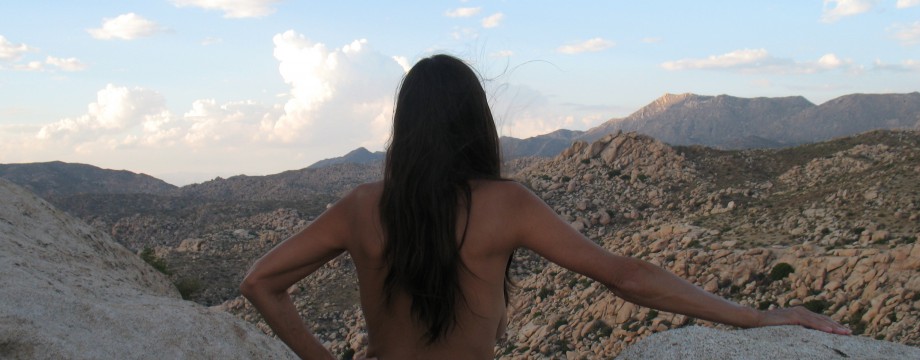
We have climbed to the top of a mountain in Bears Ears National Monument in southeastern Utah. We are sitting on the top edge of the Comb Ridge. We’ve been taking in the awe of the massive rock formations and its vistas from this peak.
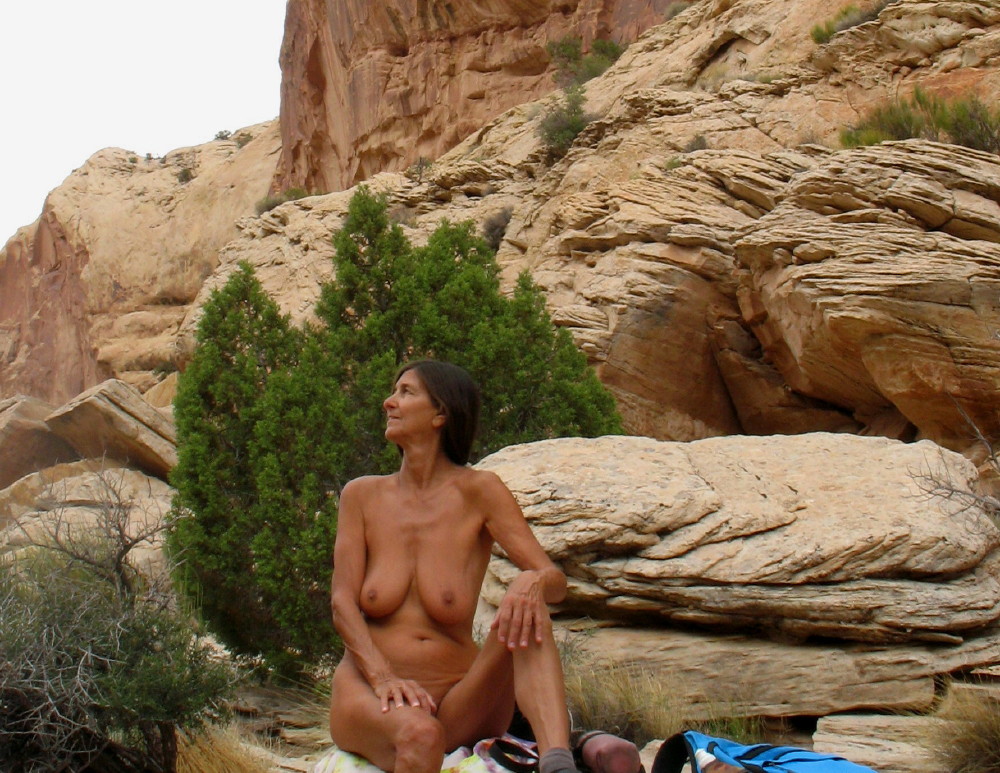
There is no want to leave, but we must. Down slope, the five finger shoes engulf my toes, as my feet slide through toward the tip of the shoe. The feet are held back by the structure, stopped by the inner toe next to the ball of my foot, unlike a regular shoe. I will lose no toe nails. I’m grateful to have these expanding toes. A couple of miles of this would definitely take my toenails in any other shoes.
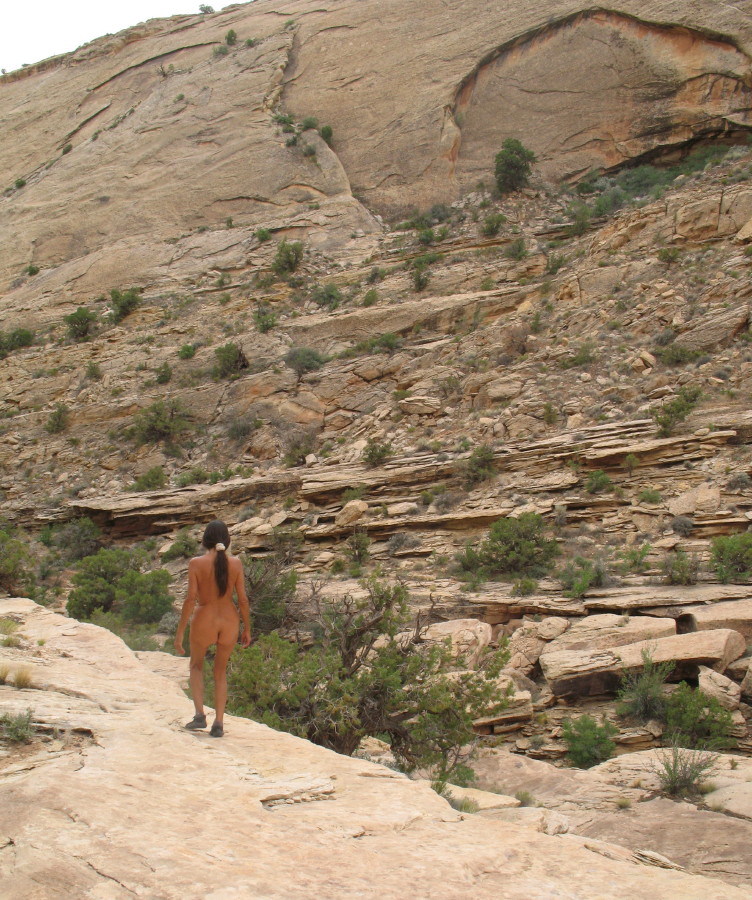
A kind of blackish thick tufts of lichen grow thick on these rocks with time. We have seen it everywhere, so far. It collects dust and in turn dust forms to mud from the sparse rains. From this it grows again, like a thick moss.

There are several sleeping rats, observes DF. She notices a couple of nests.
The lizards are fearless and plentiful. More than once, one runs casually across our toes. They are cute, some colorful for their mating season. They walk up to us as we sit, in what it would seem, their curiosity. In the dead silence of the canyon, they are thunderous in the dried leaves and brush. I am startled by one, more than once, as I walk on the trail of bedrock and sand.

On the way up, I had been looking up and back, attempting to discover another ancient artifact in a cliff.

My hope would be buildings, pictographs, or petroglyphs. From here, I can see into the crevasses and fish mouth caves, scanning their ledges from above. I know that if there was a significant fortress or granary, that there would likely be other spots exploited, too. I can see nothing else significant.
At one of the three big mouths, we are taking a zoom shot of what might be another granary above. It could also be a natural layered rock formation.

Cracked layers look like construction and alike flat pieces are also used for construction.

As I consider the facing fish mouth, I notice some tracks leading uphill. We climb a steep slippery trail of footsteps. At the top, we are rewarded by a wonderful massive natural art, which has been created by rain running on colorful rock surfaces.

But by looking down and looking closer, we see that somebody had once been living here.
There has been excavation by someone more recently.
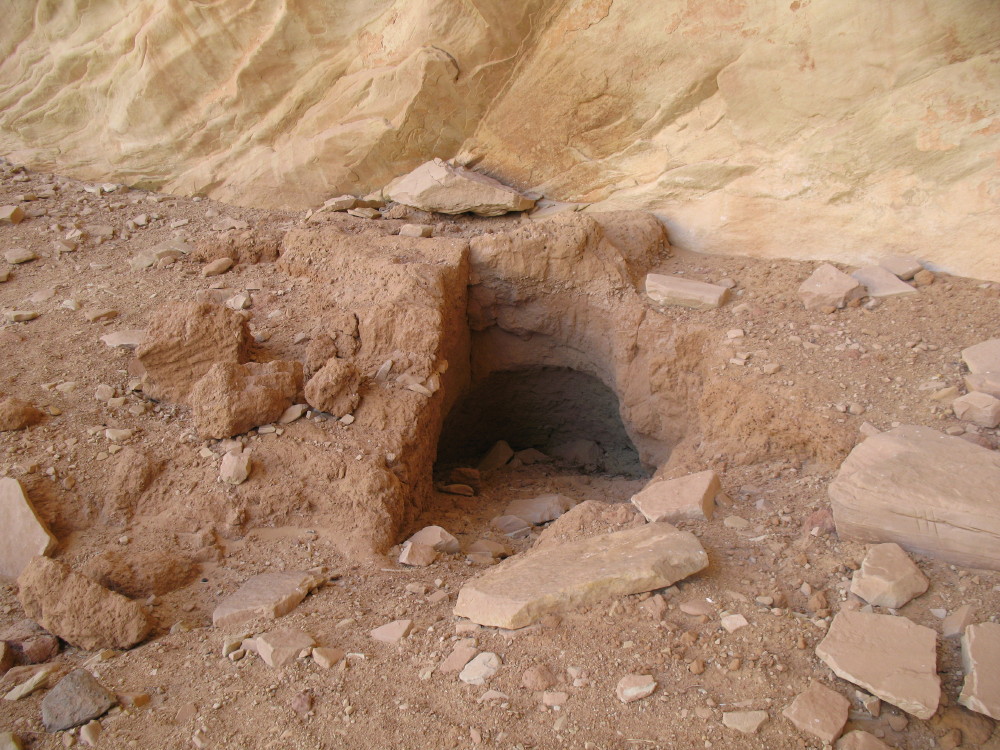
There are holes dug. There are hints of ruined walls.

As I begin to sit down to rest on a rock, before me, are some rocks that didn’t come from anywhere near here. It is harder rock, glassy with no cleavage and nothing like the sandstone. These are chards left over from making arrowheads.
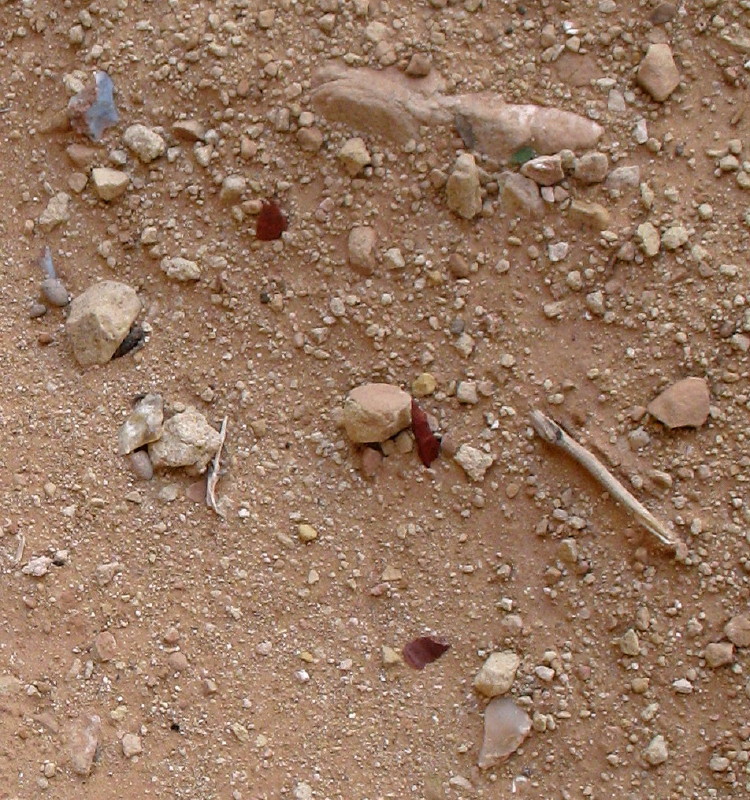
Glancing to my side, I see an amazing discovery, that I never thought I might see. There are a couple of small corn cobs.

These ancient grains were grown and consumed 800 or 1000 years ago! Desert air preserves.
Squatting, fascinated by what is below us at our feet, I take a moment to stand. Stretching and breathing in and out, I chance to turn around and pull my sore back straight.
My eyes widen, “DF look!” Across the valley, now that we are high enough, the two story building can be seen, now closer to our own level. Yet next to them is an entire complex, a fortress of block with straight walls.

It is carved like a medieval castle. It wanders across a long ledge. It is like discovering a lost city. “Ta da da ta, ta da dah,” I’m feeling like a naked Indiana Jones! “Wow!”

But how did they access it? That is a key to their security. Many scenarios come to my mind. What was it like to live here, living and working in the fields harvesting corn, squash, wheats, and cactus. They all certainly didn’t climb that cliff multiple times a day. It had to be shelter in the cold winters, storage and protection from enemies. Many scenarios come into my imagination fueled by my experience with humanity. Greed, ego, treachery, family groupings and ignorant conquerors, all of which are aspects of history. I remember the ebb and flow of weather and historical climate, which affected crops, abundance, drought, fear, alliances, power and leaders good and bad. Fourteen-thousand years of humanity and change have existed in this region and often based on growing “the three sisters”, developing of crops, strains and rain. During that and before, hunting and gathering wild flora, even hunting woolly mammoths. A civilization evolving over millennia.

Culture doesn’t stay primitive over all of those years, those centuries, not during stability. These people had no iron, no silks, nor math imported from afar, but there was trade and influences coming here from deep into Mexico. These farmers, gatherers and hunters had an intimate knowledge of their world. Did they have war every few years like us, or were they more civilized? Did an elite control the lives of the rest? What religion was shaped here? Was there famine and starvation, like we see today? Was this just one feudal castle, or did they have a tribal nation? What was their extent of compassion? Were their everyday lives dominated by fears, joy, pragmatism, and/or spirit? These questions and more will continue to fascinate us, as we immerse ourselves into imagination, clues and study the research.
We “caught a bug” today, something that will drive us for the next few weeks. This excited sense of discovery, this archeological opportunity might be an addiction. Yea, remember that look in the eyes depicted in Indians Jones and his drive toward more.
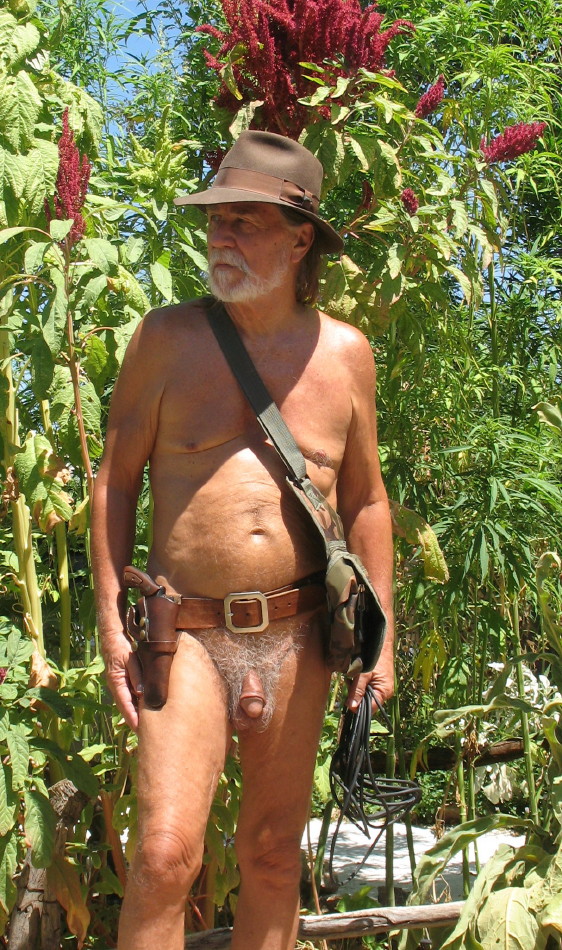
There are hundreds of more artifacts and ruins out there and we want to learn.
There is plant life here not just different, but weirdly different.

These are discoveries in themselves as we stroll back down the canyon toward camp.
There are ancient trees, pinion and juniper. These are bonsai dwarfed in the rocks above, but down here, they have constant underground water that some have obviously tapped into for centuries. Some of the familiar trees have grown into huge specimens, larger by far than we have seen in our travels.

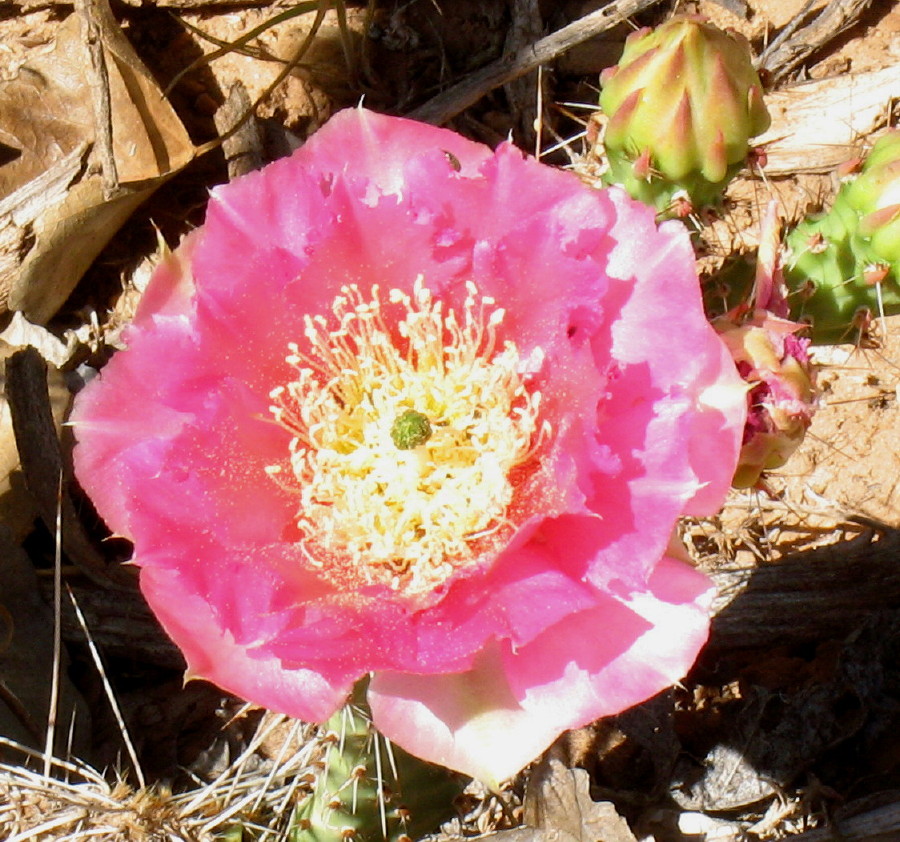
Never seen types, or even imagined individuals stop us. What’s more, it is the season and the desert is in bloom.
Back at camp, we have dinner and then a hand in hand walk across the dusty road that got us here. There are few others out here. There is that sweet sense of being here together, warmly, in a shared solitude. We wander freely without any clothing but soft shoes, but then find ourselves at the main road. We want more and decide to take the risk, wandering another mile and then down another jeep trail and back to the same riparian wash, but upstream from our camp.

We attempt photographs of illuminated canyon walls at sunset. Admire the rich blue sky, dusk, its hews and the full moon is rising amongst it all.
At a last glance out of the triangle of tent mesh, floats the full moon and orange cliffs glow before a deep sleep.

I am on the forum of FreeRangeNaturism.com often, if you would like to converse.
© The owners of TheFreeRangeNaturist.org as of the year 2015 declare. Unauthorized use and/or duplication of this material without express and written permission from this site’s author and/or owner is strictly prohibited. Excerpts and links may be used, provided that full and clear credit is given to TheFreeRangeNaturist.org with appropriate and specific direction to the original content.
 The Free Range Naturist
Thank you for sharing this beautiful experience.❤️
LikeLike